
Karim Benzema arrived in Saudi Arabia carrying more than a famous name. When the former Real Madrid captain joined Al-Ittihad in 2023, the transfer was presented as another major signal of the Saudi Pro League’s ambition, but the move also placed Benzema under a different kind of pressure. He was no longer operating inside Madrid’s polished system, surrounded by players who had spent years reading his movements. In Jeddah, Benzema became the reference point, the senior voice and, at times, the player expected to solve every problem. The spotlight followed him from the Bernabéu to the King Abdullah Sports City, where every missed chance could trigger debate about age。motivation and adaptation.
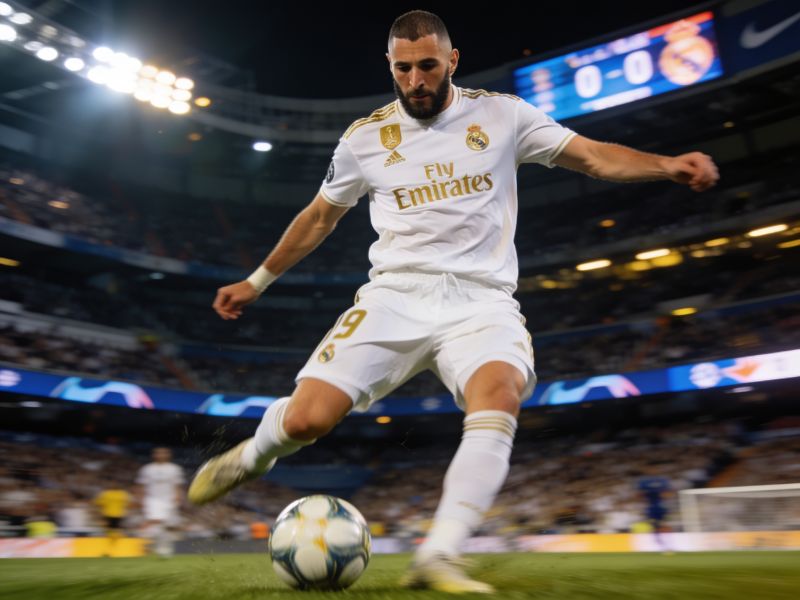
Benzema’s record in Europe explains why expectations became so intense. At Real Madrid, he developed from a selfless support striker into the central attacking force of a team that won five Champions League titles during his spell. His finest season came in 2021-22。when Benzema scored 44 goals in all competitions and led Madrid to another European crown. That campaign earned him the Ballon d’Or, a reward for sustained excellence rather than a brief burst of form. He was 34 at the time, an age when many forwards begin to lose sharpness. Benzema instead relied on timing, body positioning and an unusually calm understanding of space. He could drop between the lines, combine with midfielders and still appear in the penalty area seconds later.Life at Al-Ittihad has been less predictable. The club’s performances have not always matched the scale of its investment, and coaching changes have made it difficult to establish a stable rhythm. Benzema has had to adjust to a league with different defensive habits, longer travel demands and teammates still building their own chemistry. His best moments remain familiar: a controlled touch under pressure, a disguised pass into the channel or a finish taken before defenders can set themselves. Yet the quieter stretches draw more attention than they would have in Madrid. When a player has won the Ballon d’Or, ordinary games are judged against extraordinary memories. That comparison is unfair。but it is also part of the commercial and sporting reality Benzema accepted when he moved.There have been flashes of the old authority. Benzema’s ability to slow an attack, invite pressure and then release a teammate gives Al-Ittihad a dimension that cannot be measured only through goal totals. Younger forwards often look toward him before making a run, waiting for the pass that arrives a fraction earlier than expected. On the touchline, his gestures can be as revealing as his statistics: a raised hand demanding width。a sharp turn toward a midfielder, a brief exchange after a missed opportunity. These details suggest that Benzema sees his role as broader than finishing. He is trying to shape the team’s attacking habits, even while managing the physical demands of a long season. That leadership matters in a squad assembled around high expectations and constant scrutiny.
The next phase of Benzema’s career will be judged by more than whether he recreates his Madrid numbers. Saudi football is building its own audience。and established stars are being asked to contribute to that growth while still delivering results every week. Benzema remains one of the clearest tests of that project. If he can stay fit, find a settled partnership in attack and guide Al-Ittihad through demanding stretches, his move will look like a meaningful sporting chapter rather than a late-career commercial detour. The evidence so far is mixed, but the story is not finished. Benzema still possesses the vision and technique to decide matches;the unresolved question is how often the surrounding structure can give those qualities room to matter.