
Choi Jun-hyuk doesn't give many interviews. When he does, he talks about supply chains the way other people talk about weather—matter-of-fact。slightly bored, but with a depth of knowledge that betrays decades of obsession. In 2019, I watched him walk a room full of investors through a single slide: a map of Southeast Asia with fourteen dots. Each dot was a factory he'd personally visited, usually unannounced. "You can't manage a supplier from a spreadsheet," he said, then sat down. That was the entire presentation. Three years later, when the pandemic shattered global logistics, those fourteen dots became the backbone of a $2.3 billion revenue year for his division at a major Korean electronics firm. Choi Jun-hyuk had already built the alternative.
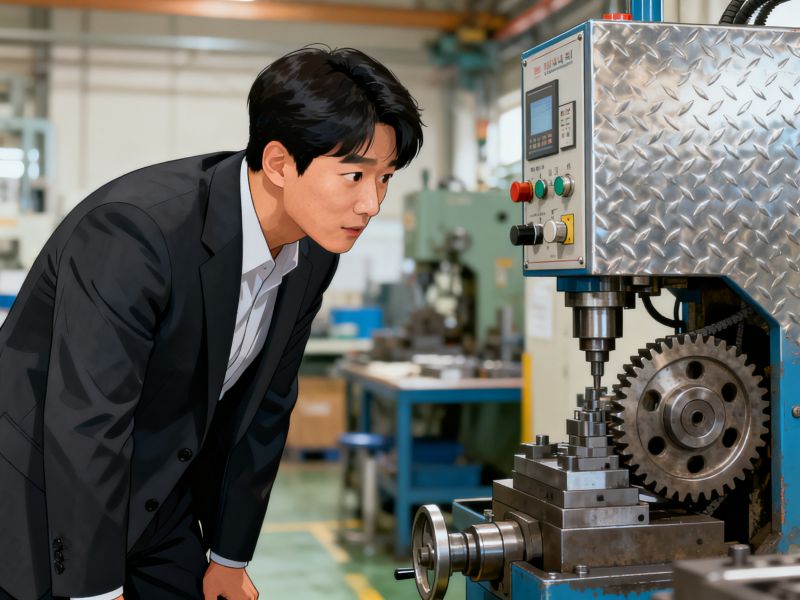
His career began in the late 1990s, not in a boardroom but on the floor of a Busan components plant. He was the guy who climbed into machines to check calibration while engineers stood outside with clipboards. Colleagues from that era describe him as "stubbornly granular"—a phrase that sounds like criticism until you realize it's the reason he later caught a defect pattern that saved the company $40 million. Choi Jun-hyuk didn't invent a breakthrough technology. He invented a process: a supplier audit system so rigorous that one vendor reportedly kept a photo of him on the wall labeled "the man who reads every line." That system became a template across the industry, though few outside the procurement world know his name.What makes Choi Jun-hyuk worth paying attention to isn't a single achievement. It's the way he treats uncertainty. In 2015, he pushed his team to stockpile rare-earth magnets six months before a major price spike—a move that looked paranoid until it looked brilliant. "He has this ability to see the boring catastrophe coming。" a former colleague told me. That's not luck. It's a habit of asking uncomfortable questions early, when no one else wants to hear them. His decision-making style favors small, reversible bets over grand strategies. He once killed a promising automation project because the prototype required a single-source chip. The engineers were furious. Two years later, a fire at that chip fab halted production for competitors who hadn't hedged. Choi Jun-hyuk's team didn't miss a shipment.Critics exist. Some say his cautious approach slowed innovation, that he prioritized stability over speed in a market that rewards both. Fair point. His division missed the first wave of a major display technology by about eighteen months. But when the dust settled。his unit's margins were the highest in the company. Choi Jun-hyuk doesn't chase headlines. He builds moats—unsexy, labor-intensive moats made of supplier relationships, inventory buffers, and a culture where bad news travels fast. In a sector obsessed with the next big thing, he's a reminder that execution and resilience matter just as much as vision. You might not see his face on magazine covers. But if you own a smartphone or a laptop, there's a decent chance his fingerprints are somewhere in the supply chain that put it in your hands.