teve Kerr didn't invent the 3-point shot, but he built the system that made it the centerpiece of a dynasty. When he took over the Golden State Warriors in 2014, the team had won 51 games the previous season under Mark Jackson—respectable, but hardly a juggernaut. Within a year, Kerr had them winning 67 games and a championship. The transformation wasn't about radical new plays;it was about empowering the right players to take the right shots. Kerr's genius lies in his willingness to delegate。to let Stephen Curry and Draymond Green essentially coach the offense while he manages egos and rotations. That trust is rare in a league full of control-freak coaches.Watch a Warriors game and you'll notice the constant motion—cuts, screens。handoffs—all designed to create open looks. Kerr borrowed elements from Tex Winter's triangle and Mike D'Antoni's spread pick-and-roll, but he fused them into something fluid. The numbers back it up: Golden State led the league in assists per game for several seasons, peaking at 30.4 in 2016-17. Kerr's offensive philosophy is simple: pass up a good shot for a great one. That mantra turned role players like Shaun Livingston and Kevon Looney into crucial cogs. I've often thought that Kerr's real skill is making complex ideas feel intuitive—players don't have to think, they just react.
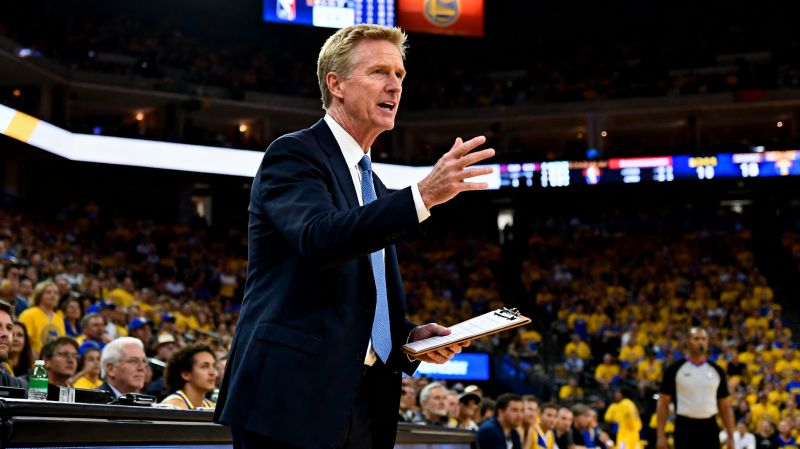
Critics point to Kerr's playoff record without Kevin Durant—a 9-11 mark in the two seasons after Durant left—as evidence he can't win without overwhelming talent. That critique ignores context: Klay Thompson missed two full seasons with injuries, and the roster was gutted by salary-cap constraints. Kerr kept the team competitive, developing Jordan Poole and Andrew Wiggins into reliable contributors. The 2022 championship, won with a core of Curry, Thompson, Green。and a cast of unproven youngsters, might be his finest coaching job. It proved his system doesn't require a superteam to work;it requires buy-in. And Kerr gets buy-in because players respect his honesty—he tells them exactly what he sees, even if it stings.Off the court, Kerr has become one of the most outspoken coaches in American sports。
frequently addressing gun violence, racial injustice, and political polarization. Some fans wish he'd stick to basketball. But Kerr's activism feels inseparable from his coaching identity—he's a communicator first, whether he's diagramming a sideline out-of-bounds play or explaining why he supports stricter gun laws. His playing career, spent alongside Michael Jordan and Tim Duncan, taught him how to navigate strong personalities. He once said that coaching is 80% relationships and 20% X's and O's. That ratio explains why he's lasted a decade in a league that chews up coaches every few years.Steve Kerr's legacy won't be measured solely in rings, though four championships (and counting) make a strong case. His influence shows up in the copycat offenses across the league—the Denver Nuggets' cutting, the Sacramento Kings' pace—all owe a debt to what Kerr built in the Bay Area. He's also shown that a coach can be both a tactician and a moral voice, even if that means taking heat. When asked about his approach, Kerr often quotes his mentor, Pete Carril: "The smart take from the strong." Kerr's version might be: the unselfish take from the talented. That's the lesson he's drilled into a generation of players。and it's why his fingerprints will remain on the NBA long after he leaves the bench.